

Table of Contents
Accurate measurement transforms good recipes into great ones. This guide explores measuring cups and spoons, highlighting the differences between liquid and dry tools, materials, proper techniques, and maintenance. You’ll learn how to measure precisely, choose the right utensils for baking and cooking, and avoid common errors that affect texture, taste, and consistency.
Why precision matters in cooking and baking
Precision is a cornerstone of both baking and cooking, and even small discrepancies can dramatically impact results. The right cups and spoons are especially critical in baking, where ingredients act as building blocks in delicate chemical reactions.
Chemistry in Baking: A minor error—such as using 10% extra flour—absorbs more moisture and can turn a tender cake into a dense, dry one. Too much baking powder or soda alters rise, affects flavor, and creates coarse texture. Spoons help ensure leaveners stay balanced instead of overpowering your recipe.
Texture and Consistency: Chewy cookies, tender breads, and creamy custards rely on correct proportions. Liquids and solids behave differently, so dry cups or liquid cups must be used as intended. A little too much water makes dough sticky; too little reduces elasticity and oven spring.
Liquid vs. Dry Mistakes: Flour compacts in dry cups, so using the wrong tool leads to under-measurement. Liquids poured into dry cups read inaccurately. Each ingredient responds differently to misjudged volumes, amplifying inconsistency. Keeping dry and liquid tools separate is essential for dependable results.
Situations where precision matters most:
Breads (hydration and yeast balance)
Custards and puddings (egg, sugar, liquid ratio)
Sauces and dressings (proper emulsification)
Fermentation (correct salt and sugar levels)
Practical takeaways:
Use dry cups for solids and liquid cups for fluids.
Level ingredients with a straight edge for accuracy.
Double-check spoon sizes—teaspoon vs. tablespoon can make or break a recipe.
Types materials and designs of measuring cups and spoons
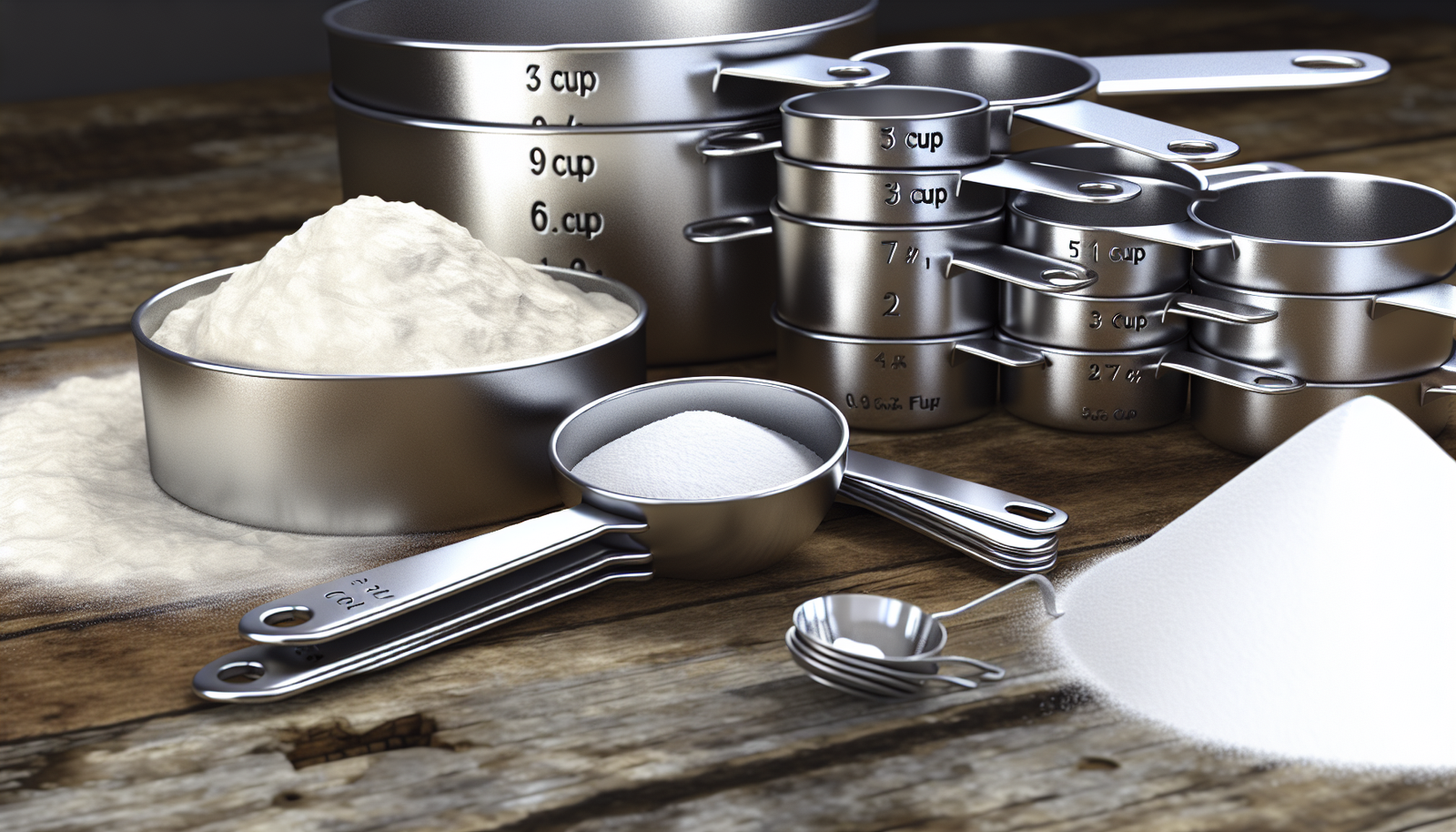
- Dry Cups: Designed for ingredients like flour, sugar, and grains, dry measuring cups come in nested sets—often 1/4, 1/3, 1/2, and 1 cup—or as individual cups for bulk measurement. Their flat rims help with precise leveling to ensure baking measurements are exact. Stainless steel dry measuring cups are valued for accuracy and durability, while plastic and silicone options are lighter and less expensive.
- Liquid Cups: Essential for water, milk, and oils, the glass measuring cup is a kitchen staple with clear volume markings and a spouted lip for easy pouring. Liquid measuring cups also come in plastic and silicone, with features like metric and imperial measurement lines that improve their versatility. Look for designs with bold, etched markings that stay visible after repeated washing and withstand high temperatures for hot liquids.
- Measuring Spoons: Used for spices, baking powder, and small amounts of liquids, these usually come in sets attached by a ring or as magnetic sets that nest together for storage. Magnetic measuring spoons often feature double-ended designs for versatility, and those with leveling edges help scrape off excess for pinpoint accuracy.
- Materials Analysis:
- Stainless Steel Measuring Cups/Spoons: Pros: Highest precision, durable, dishwasher safe, odor and stain resistant. Cons: Higher price.
- Glass Measuring Cup: Pros: Excellent for liquids, heat resistant, does not absorb odors or stains, accurate markings. Cons: Can break if dropped, heavier.
- Plastic: Pros: Lightweight, affordable, wide variety. Cons: Scratches, can absorb odors or discolor, markings may fade, can warp with heat.
- Silicone: Pros: Flexible, easy to extract sticky ingredients, heat resistant. Cons: Sometimes floppy, less precise edges.
- Ceramic: Pros: Attractive, doesn’t retain odors, some are decorative. Cons: Breakable, heavy, not always precisely marked.
- Material Recommendations by Use Case:
- Baking: Stainless steel dry measuring cups and spoons for precision;
- Sticky Ingredients: Silicone or plastic cups/spoons for easy release;
- Hot Liquids: Glass measuring cup for heat resistance and clear readings.
- Design Innovations for Precision:
- Etched or embossed markings prevent fading and enhance long-term measurement accuracy.
- Flat rims on dry measuring cups enhance leveling for accurate baking measurements.
- Distinct pour spouts on glass or plastic liquid measuring cups ensure mess-free, precise liquid transfers.
How to Measure Correctly for Consistent Results
Dry Ingredients: Spoon-and-Level vs. Scoop-and-Level
Spoon-and-Level: For flour, cocoa, or powdered sugar, fluff the ingredient, spoon it lightly into a dry cup, then level the top with a straight edge. This avoids compacting, which leads to dense, dry baked goods.
Scoop-and-Level: Dipping the cup directly into the bag can compress the ingredient by up to 25%. Use this technique only for items meant to be packed, such as brown sugar.
Sticky Ingredients: Honey, Molasses, Syrups
Lightly oil cups or spoons to prevent sticking. Scrape with a spatula to ensure accurate transfer of thick liquids.
Liquids: Meniscus and Surface Reading
Use a clear glass cup with printed lines. Place it on a flat surface and read the level at the bottom of the meniscus. Pour slowly to avoid overshooting and never rely on the curved “dome” created by surface tension.
Measuring Spoons: Leveling and Spices
For dry items, fill the spoon and sweep the excess with a flat edge—unless the recipe explicitly calls for a rounded or heaping amount. When working with spices or leaveners, overfill, then level precisely to avoid throwing off flavor or chemical reactions.
When Weight Is Better Than Volume
A scale is the most reliable tool for bread and pastry work because humidity and packing affect cup volumes.
Examples:
1 cup all-purpose flour ≈ 120–130 g
1 cup water = 240 g
A digital scale ensures exactness every time.
Quick Troubleshooting
Dense texture: Ingredient compaction—use the spoon-and-level metod.
Sticky dough: Too much liquid—double-check readings.
Failed rise: Revisit your ingredient quantities.
Brown sugar: Should hold its shape when packed correctly.
Care, Accuracy Checks & Calibration
Keeping your tools in good condition ensures long-term precision.
Material Care
Stainless steel: Dishwasher-safe; dry well to avoid spots. For odors (garlic/turmeric), soak briefly in baking soda water.
Plastic: Many are top-rack only; replace warped or melted pieces.
Glass: Dishwasher-safe; remove mineral buildup with a vinegar soak.
Silicone: Flexible and dishwasher-safe; clean discoloration with a baking-soda paste.
Calibration
Verify your 1-cup utensil by filling it with water and weighing—1 US cup should be close to 240 g.
Replace any item with worn markings, dents, warping, or loose handles.
Maintenance Checklist
Dry fully before nesting.
Store spoons on a ring or separated.
Keep tools for spices separate in allergy-sensitive kitchens.
Replace heavily used sets yearly if precision is critical.
Buying Guide: Choosing the Right Tools
Materials
Stainless steel: Most durable and accurate.
Glass: Ideal for liquids; easy microwave use.
Plastic: Budget-friendly but less durable.
Silicone: Flexible, color-coded, great for kids or beginners.
Markings
Choose etched or molded units—printed-on labels fade quickly.
Set Composition
Dry cups: 1 cup, ½ cup, ⅓ cup, ¼ cup (ideally ⅛ cup).
Spoons: 1 tbsp, 1 tsp, ½ tsp, ¼ tsp (and ⅛ tsp for precision).
Liquid cups: 2-cup or 4-cup options for versatility.
Budget Tiers
Entry-level: Durable plastic or steel with clear markings.
Mid-range: Full stainless sets plus a quality glass cup (OXO, Cuisipro).
Professional: Calibrated steel sets with specialty mini-spoons.
Additional Considerations
Dual units (metric & US) eliminate conversion mistakes.
Nested sets save space; individual pieces are easier to grab.
Glass and stainless steel last longest, supporting sustainability.
Must-Haves at Minimum
One sturdy liquid cup
Full dry cup set
Complete spoon set including ⅛ tsp
A few specialty mini-spoons for fine ingredients
Conclusion
Precision matters. The right cups, spoons, and weighing tools ensure consistent results, better flavor, and fewer cooking errors. With proper care, calibration, and smart selection, your equipment will stay accurate for years—and your recipes will be more reliable and delicious.
[…] Why precision matters in cooking and baking […]