

Table of Contents
Wireless and Bluetooth meat thermometers make precise, hands‑free monitoring essential for safe, succulent cooking. This guide explores wireless thermometers — digital and Bluetooth models — how to use them, what makes a thermometer the best choice, and how to pick and maintain the right meat thermometer for grilling, smoking, roasting, or sous‑vide. Expect practical tips, temperature targets, and buying criteria.
Why Choose a Wireless Thermometer
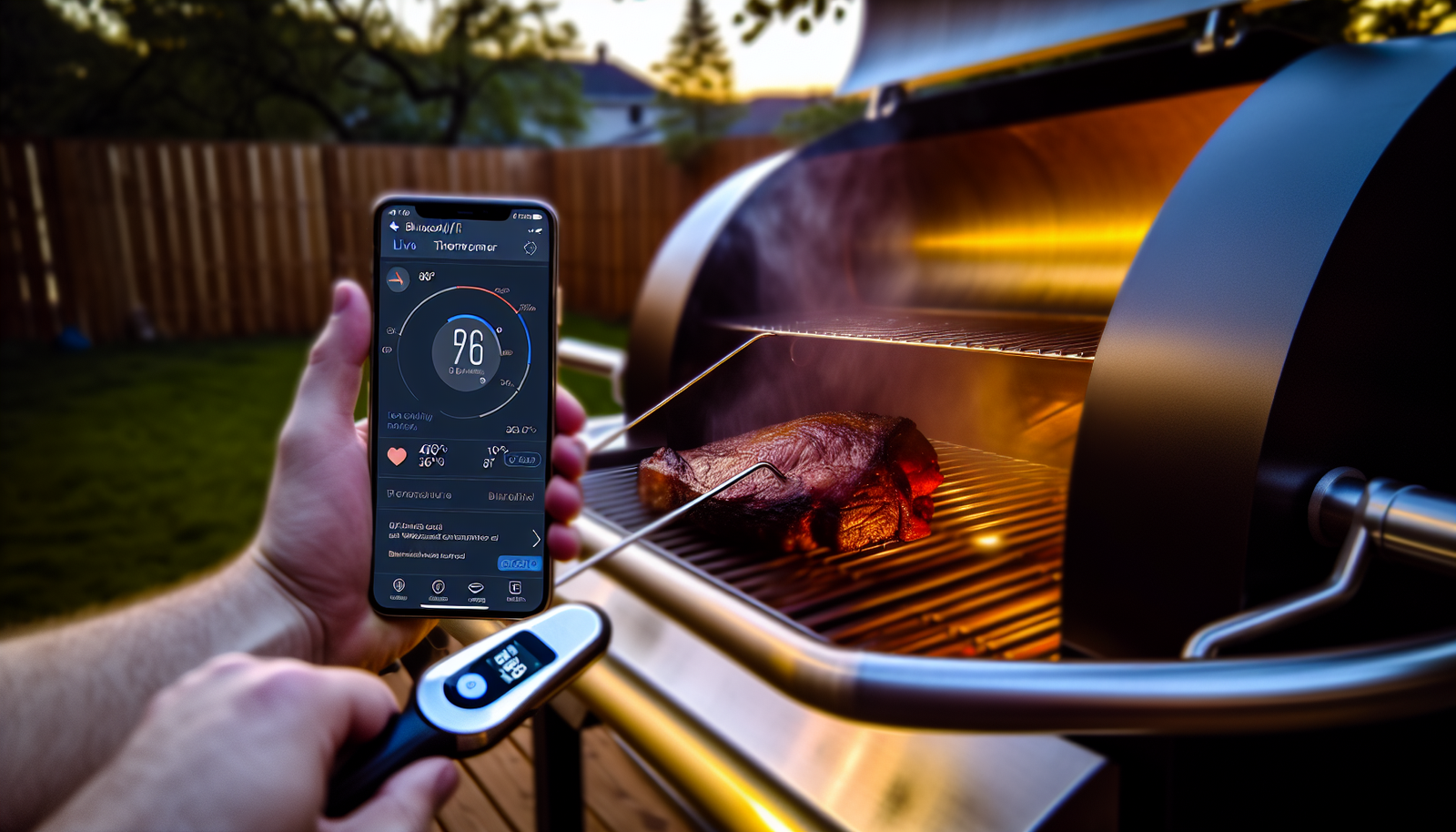
Wireless thermometers are revolutionizing the way home cooks and grill enthusiasts monitor meat temperatures. Unlike traditional tools, a wireless thermometer transmits real-time data to a smartphone or receiver, letting you track temperatures without being tethered to the oven, grill, or smoker.
The term wireless meat thermometer refers to systems where the sensor in the meat sends readings via Bluetooth or Wi-Fi, either directly or through a transmitter base. A meat thermometer digital is any thermometer, wired or wireless, that displays temperatures numerically—these are easier to read and more accurate than analog dials. A meat thermometer Bluetooth adds a layer of convenience, allowing connectivity to your phone for remote monitoring, often within 100–200 feet, depending on obstacles.
Key advantages:
- Remote Monitoring: Check temperatures from inside your home, reducing the need to hover by the grill or smoker.
- Enhanced Safety: No need to open the oven/smoker repeatedly, preserving heat and reducing the risk of burns.
- Ideal for Prolonged Cooks: Multi-hour cooks, like brisket or pork shoulder, benefit hugely from real-time tracking and no drop in chamber temps.
- Hands-Free Alerts: Most models send notifications when target temps are reached or if thresholds are exceeded.
There are some limitations:
- Signal Range: Obstructions, like walls or metal cookers, can shorten effective range, especially with Bluetooth.
- Battery Life: Wireless probes and transmitter bases require periodic recharging or battery changes, which can interrupt a cook if not planned.
- Latency: Some wireless models take a few extra seconds to report changes in temperature, which matters for fast-cooking items.
Example uses: Checking a roast in your oven from the living room, monitoring ribs on your smoker out in the yard, or keeping track of chicken on a rotisserie without returning to the grill. For sous-vide, a waterproof probe is essential; high-end wireless models meet this need. However, when grilling thin cuts or needing an ultra-fast reading (like steak), a wired or instant-read digital thermometer may be more suitable due to speed and direct contact.
Key decision factors:
- Accuracy and speed
- Wireless range and stability
- Number and type of probes
- Mobile app quality, alerts, and data logging
- Battery type and runtime
- Waterproof and heat resistance ratings
For deeper comparisons, move on to types and key features—knowing which thermometer style fits your needs is the next step.
Types and Key Features of Meat Thermometers
- Instant-Read Digital Thermometers: Fast-Read Probes & Infrared
- Speed: Delivers readings in 2-5 seconds.
- Accuracy: Most models offer ±1–2°F (±0.5–1°C); IR types may have ±2–5°F margins due to surface-only sensing.
- Best Use: Quick spot-checks for steaks, cut portions, and thin meats; IR is useful for surface temp but does not check internal doneness.
- Limitations: Not suited for leave-in monitoring; IR types can’t detect internal temperatures; must insert probe correctly for core readings.
- Wired Probe Thermometers
- Speed: Continuous monitoring throughout cooking.
- Accuracy: Typically ±1.8°F (±1°C).
- Probes: One or more probes; cable length often 36–48” for flexible placement.
- Best Use: Ovens, smokers, rotisserie; allows grill door closed during cooking.
- Limitations: Cable clutter, limited mobility, cable heat limits (usually up to 700°F/370°C).
- Bluetooth Meat Thermometer Probes
- Wireless Range: 100–165 ft; advanced models extend this with repeaters.
- Accuracy: ±1–2°F (±0.5–1°C).
- Best Use: Remote grilling, smoking, kitchen or backyard monitoring with phone alerts.
- App Features: Graphs, temp logs, doneness alarms, presets, cloud sync (on high-end units).
- Limitations: Range limited by walls/interference, requires compatible device/app.
- Wi‑Fi Enabled Thermometers
- Unlimited Range: Data and alarms from anywhere with internet.
- Accuracy: ±1.8°F (±1°C) is standard in quality devices.
- Best Use: Long cooks, monitoring away from home, multi-zone grilling.
- Limitations: Must connect to reliable Wi‑Fi, may need setup/registration, firmware updates essential for bugfixes/features.
- True Wireless Probe Systems (No Lead Wires)
- No wires—probe relays data directly to app or base.
- Accuracy: ±1.8–2°F (±1°C).
- Best Use: Rotisserie, sous vide, multi-rack smokers, portability.
- Limitations: Battery charge (2–24 hrs per use), probe body heat resistance, occasional signal loss in dense grills.
- What makes the best meat thermometer
- High accuracy (±1°F/0.5°C) and rapid response time
- Reliable connectivity suited for your location (Bluetooth, Wi‑Fi, or wired as needed)
- Sufficient number of probes to monitor all foods and grill temps simultaneously
- Probe cable length and heat rating match your cooker
- App with graphs, alarms, doneness presets, and customizable alerts
- Waterproof or high splash-resistance for grill/sink use
- Food-safe materials, durable stainless steel probes
- Long battery life (rechargeable or user-replaceable)
- Firmware/app updates for ongoing feature support
- Target Internal Temperatures for Common Meats:
- Beef, lamb: Rare – 125°F (52°C), Medium – 135°F (57°C), Medium-well – 150°F (66°C)
- Pork: 145°F (63°C), rest before slicing
- Poultry: 165°F (74°C) for whole/ground chicken or turkey
- Lamb: Medium-rare – 130°F (54°C)
- Ground meats: 160°F (71°C)
- Fish: 145°F (63°C) or until opaque and flaky
- All: Follow USDA/food authority safe minimums for your region
- For best results, review the next chapter for step-by-step guidance on how to use your thermometer accurately every time.
How to Use a Meat Thermometer Correctly
- Probe Placement by Cut:
- Thick Roasts: Insert the probe horizontally into the center, avoiding fat and bone—aim for the thickest part to get the most accurate reading.
- Whole Poultry: Push the probe into the inner thigh (not touching bone). For large birds, check both thigh and breast for safe doneness.
- Burgers: Insert the probe sideways into the center to measure the middle, not just surface doneness.
- Fish Fillets/Steaks: Slide the probe into the thickest section from the side, parallel to the grill or pan.
- Wait for a Stable Reading:
- Digital/Instant-Read: Wait 3–8 seconds, or until the display stops changing. Infrared types measure surface only—don’t rely on them for internal temps.
- Wireless/Bluetooth Probe: Keep the probe in throughout cooking; readings update in real time without opening the oven or grill.
- Check Multiple Spots: Cold or hot spots are common. Confirm by testing several areas, especially in large cuts. Use the lowest consistent reading as your guide.
- Temperature Carryover: Remove meat when it’s 3–5°F (2–3°C) below target; heat will rise after resting. Pulled too late, food overcooks fast!
- Alarms and App Presets:
- For Bluetooth or wireless meat thermometer systems, use the app to set target temps or specific doneness levels. Enable both temperature and time alarms.
- Keep your phone within the Bluetooth range—walls and grills may shorten range significantly.
- Pairing & Troubleshooting Connectivity:
- Open your thermometer app, activate Bluetooth on your phone, and follow pairing prompts. If not connecting, move closer, check batteries, or reset the thermometer.
- Reconnect if signals drop. For consistent results, position the receiver or phone on the grill side facing the house.
- Using Digital Models Without Wireless: Insert the probe, read after 5–10 seconds, and wipe between checks. Compare against the meat thermometer Bluetooth model as needed for confirmation.
- Wrong probe depth: Always target the thickest area, away from fat and bone. Reposition probe if unsure.
- Near bone or fat: Relocate to muscle only; bone/fat conducts heat differently and skews readings.
- Low battery: Replace or recharge batteries if readings fade or wireless connection drops unexpectedly.
- App notifications off: Enable notifications and allow background operation to avoid missing doneness alerts on your wireless meat thermometer app.
The next section reveals the top picks and key decision points to help you select the best thermometer and meat thermometer Bluetooth setup for your unique cooking style.
Top Picks and Buying Guide for the Best Meat Thermometer
Choosing the best meat thermometer involves balancing precision, features, and budget according to your cooking style. Our evaluation criteria focus on accuracy (critical for safe doneness), response speed (time to steady reading), wireless range (especially for Bluetooth or truly wireless models), app quality for monitoring and alerts, durability (especially probe construction and water resistance), and probe count for multitasking.
- Best Overall Wireless Meat Thermometer:
A multi-probe, app-connected system excels for roasts, BBQ, and everyday use, combining solid accuracy, wide wireless range, and a feature-rich app. Look for robust construction, a waterproof rating for the probes, and user-friendly temperature graphing. Pros: All-in-one versatility. Cons: Higher price.- Accuracy: ±1°F
- Temp range: up to 572°F
- Probe count: 2–4
- Wireless range: 150–500 ft
- Battery life: 24–72h cook time
- Waterproof rating: IPX6–7
- Price tier: mid-high
- Best Bluetooth Thermometer for Grilling:
Prioritize short response times, rugged build, and Bluetooth meat thermometer reliability with open-grill range. Pros: Rapid readouts, grill-safe. Cons: Limited phone range.- Accuracy: ±2°F
- Temp range: up to 600°F
- Wireless range: 100–165 ft
- Battery life: 30+ hours
- Waterproof rating: IPX5+
- Price tier: mid
- Best Digital Instant-Read for Kitchen Use:
A meat thermometer digital model for quick, one-handed use. Look for ultra-fast read times and compact storage. Pros: Precision. Cons: No remote monitoring.- Accuracy: ±0.9°F
- Temp range: -58–572°F
- Probe count: 1
- Battery life: 2–3 years (AAA or CR2032)
- Waterproof rating: IPX6
- Price tier: low–mid
- Best Budget Pick:
Basic wireless meat thermometer models can still be reliable. Stick to straightforward, no-frills designs with clear displays and dependable accuracy. Pros: Value. Cons: Limited range/features.- Accuracy: ±2–3°F
- Wireless range: 75–100 ft
- Probe count: 1–2
- Battery life: 20 h
- Price tier: low
- Best for Smoking/Long Cooks:
Multi-probe wireless thermometers excel for brisket or multi-item BBQ. Must withstand long heat exposure and deliver consistent remote monitoring. Pros: Ambient+food temp, alert stacking. Cons: Bulky base units.- Accuracy: ±1.5°F
- Probe count: 2–6
- Wireless range: up to 500 ft (Wi-Fi models)
- Battery life: 36–48 h or plug-in
- Waterproof rating: high
- Price tier: mid–high
- Best for Sous-Vide:
Choose sleek models with fine-tip waterproof probes, gentle temp monitoring, and quick calibration. Pros: Water resistance, tip sensitivity. Cons: Fewer app features.- Accuracy: ±1°F
- Temp range: up to 212°F
- Probe count: 1
- Waterproof rating: IPX7 or better
- Price tier: low–mid
For negotiation and warranty, always check for clear return policies and at least a one-year warranty. Reputable third-party reviews (search for testing methodologies, not just user ratings) are the best predictor of true performance. Be wary of exaggerated range/accuracy user claims—real-world kitchen settings (walls, interference) may differ.
Actionable Buying Checklist:
- List your primary use case (grill, kitchen, smoker, sous-vide)
- Prioritize must-haves (probe count, wireless range, waterproof)
- Compare warranties/return windows
- Spot-check professional review sites for reliability verdicts
- Set a price ceiling before shopping
Maintenance, Troubleshooting and Advanced Tips
Proper upkeep ensures your wireless meat thermometer stays accurate for years. Clean probes immediately after use with a damp cloth and mild detergent; for deeper cleaning, sanitize with alcohol wipes or immerse only the metal probe in hot, soapy water (never the handle or connector). Prevent cross-contamination by sanitizing between meats. Store the digital unit and probes in a dry, dust-free place—many come with magnetic backs or protective cases. Maintain batteries by recharging or replacing them promptly and following manufacturer guidelines. If probes become cracked, corroded, or show erratic readings, replace them.
Calibration ensures continued accuracy. The simplest method uses an ice bath: submerge the tip of your digital or wireless meat thermometer probe in a glass of ice water (not touching sides or bottom); after 30 seconds, it should read 32°F (0°C). For boiling point, insert the probe into boiling water, expecting 212°F (100°C) at sea level (adjust for altitude as necessary). Some models offer digital recalibration via their app or display; if not, log your calibration notes and mentally adjust your readings accordingly.
To maximize performance, use multiple probes for two-zone grilling or monitoring different thick cuts. Distinguish between ambient air temperature (grill/smoker environment) and internal meat temperature—meat thermometer bluetooth models often come with dedicated ambient probes. Set alarms to factor in carryover cooking; meat continues to rise in temperature after removal from heat, so plan accordingly. Advanced users can integrate thermometer data with cook planning apps for graphing temperature curves or scheduling steps.
For troubleshooting: If your wireless meat thermometer disconnects, ensure both device and transmitter are within suggested range, reduce electronic interference, and re-pair via Bluetooth or Wi-Fi. Regularly update firmware to resolve bugs, but follow prompts closely—failed updates may require factory reset. Address app permission issues by confirming location and Bluetooth access are enabled. Intermittent signals often trace back to thick walls or metal. Relocate receiver or avoid high-interference zones.
Safety reminders: Never submerge radio/digital heads in water, sanitize between uses, keep batteries away from children, and don’t use a damaged probe.
With these strategies, your wireless and bluetooth meat thermometer remains a precision cooking companion, paving the way for the final chapter on safe and masterful meat preparation every time.
Conclusions
Choosing the right wireless meat thermometer combines accuracy, range, durability, and ease of use. Follow best practices for probe placement, calibration, and smart features to achieve safe internal temperatures and ideal doneness. Whether you pick a Bluetooth, Wi‑Fi, or wired digital model, informed selection and proper use ensure better, safer, and more consistent cooking results every time.
For more products reviews click here.