

Table of Contents
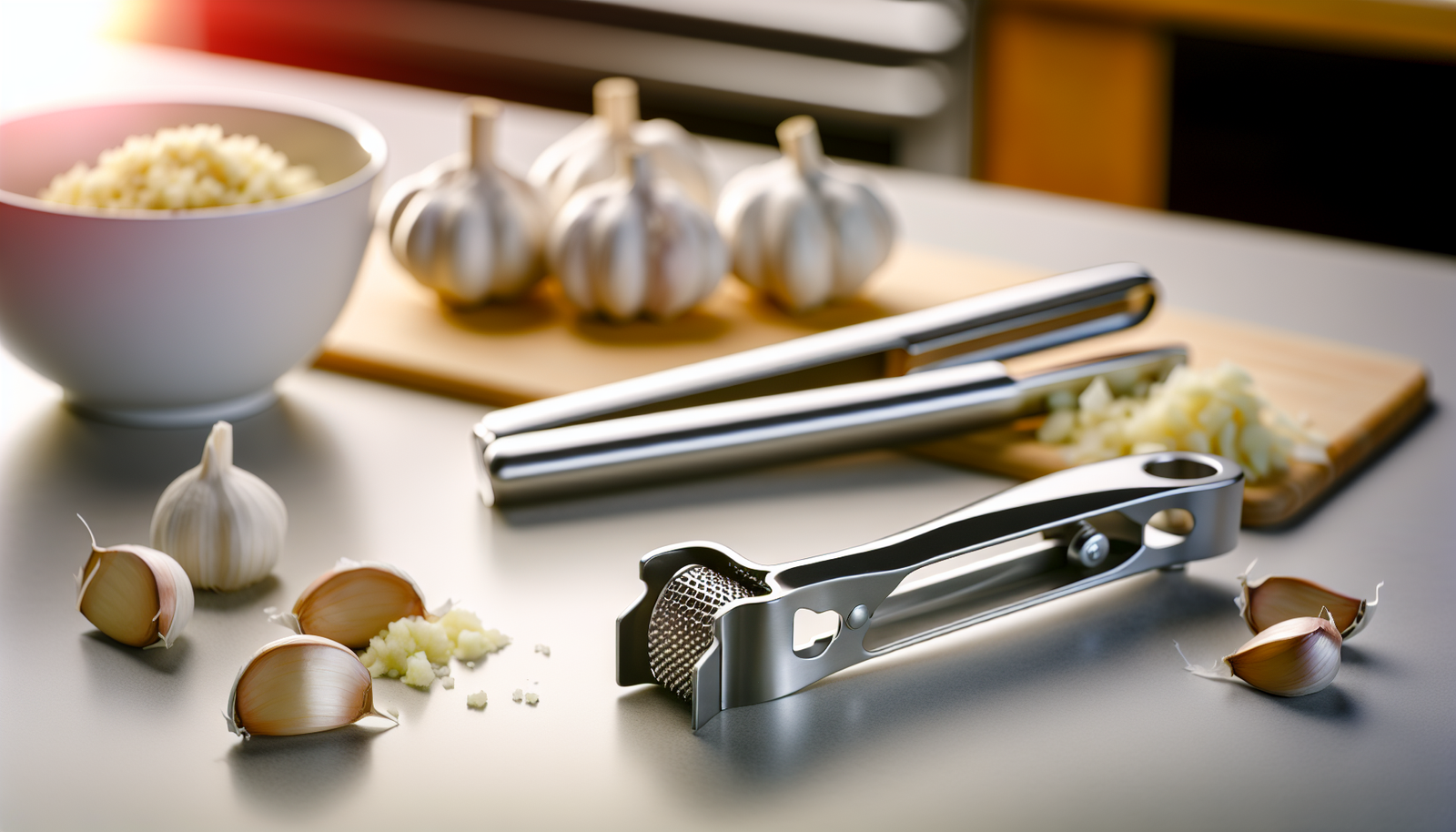
Discover the best garlic press options and practical techniques to crush and mince garlic efficiently. This article compares top models like the OXO Good Grips and Arc Raiders presses, explores the one-piece garlic rocker, and explains how to press garlic by hand. Read clear buying, cleaning, and usage advice to pick the right tool for your kitchen and improve flavor extraction in every dish.
How garlic presses work and why they matter
A garlic press is a specialized kitchen tool designed to quickly and efficiently crush garlic cloves by forcing them through a matrix of small holes, creating a fine mince and releasing the clove’s intense flavor and aroma. The three most common types are the traditional hinged basket press (where you insert the clove and squeeze the handles), the single-piece garlic rocker (using a rocking motion to push garlic through perforations), and tube-style micro presses (compact and often used for small portions or travel).
Garlic presses matter in cooking because the process of pressing ruptures more of the garlic cell walls than slicing or rough chopping. According to culinary science sources, such as the Serious Eats guide to garlic and studies analyzed by Cooks Illustrated, pressing garlic dramatically increases the release of sulfur compounds (notably allicin), which are responsible for the signature pungency and health benefits of raw garlic. This leads to a stronger, more immediate flavor compared to chopped or sliced garlic, where fewer cells are broken and juice is less fully extracted.
Comparing Pressing vs. Knife and Microplane Methods:
- Speed: Pressing is typically faster – about 5-10 seconds per clove, versus 20-30 seconds with a knife and 10-15 seconds with a microplane.
- Flavor Extraction: Pressed garlic yields the most robust aroma and taste; microplane comes close, while knife-minced garlic is milder.
- Texture: Presses and microplanes both produce a nearly paste-like consistency, while knives allow for coarse or finely chopped pieces with more texture retention.
- Cleanup: Knives and microplanes can be easier to rinse, but basket presses may require a cleaning tool or brushing to dislodge garlic residue.
- Control: Knife mincing gives the cook direct control over size and texture; presses produce uniform, fine outputs but can’t adjust particle size.
Practical Metrics:
- Approximate time per clove: Press – 5-10 seconds; Knife – 20-30 seconds; Microplane – 10-15 seconds.
- Mince consistency: Press – fine/paste; Microplane – ultra-fine puree; Knife – variable (based on skill and style).
- Garlic yield per clove: Press – highest, with nearly all juice extracted; Knife – moderate; Microplane – high but can waste small bits on grater.
Ergonomics and User Recommendations:
- Presses are especially useful for those with limited knife skills or hand dexterity, though some lower-quality models can cause hand strain.
- Garlic rockers require less grip strength, making them suitable for cooks with arthritis or injury.
- Microplanes are best for those seeking ultra-fine garlic with minimal force, but require careful cleaning to avoid lingering odor and clogs.
- Knife methods suit cooks who value texture control and want to avoid additional tools.
Understanding these mechanics and trade-offs helps guide home cooks toward the best garlic press tools, which will be explored in the next chapter, starting with top-rated handheld models like the OXO Good Grips.
Top handheld presses including OXO Good Grips
Among the best garlic press options for most home cooks, classic handheld presses continue to dominate for their familiar feel and broad usability. Top recommended models include:
- OXO Good Grips Garlic Press – Renowned for comfort and durability; suitable for daily use and arthritis-friendly.
- Dreamfarm Garject – Clever design ejects peel automatically with minimal mess, great for high-volume pressing.
- Heavy-Duty Stainless/Cast Zinc Presses – Strong, often with fine-grate baskets; require more force but mince thoroughly.
Focusing on the OXO Good Grips Garlic Press, this model features sturdy die-cast zinc construction with a dishwasher-safe, removable basket that makes it exceptionally easy to clean compared to many rivals. Its wide, comfortable non-slip handles are ergonomically designed, distributing pressure so even users with less grip strength can press multiple cloves with minimal strain. The basket capacity fits 1–2 average cloves, and its grid pattern produces a fluffy, even mince with markedly reduced bitterness vs. improper chopping. Price tends to fall in the $17–$22 range, reflecting its robust build and long-term reliability. The OXO garlic press earns repeated “best garlic press” accolades thanks to its mix of user-friendly cleaning features, consistent mince texture, and reliable performance over time.
- OXO Good Grips
- Pros: Cushioned, slip-proof handles; quick-release basket; streamlined cleaning; durable die-cast zinc; dishwasher safe.
- Cons: May require two hands for very large or hard cloves; not as peel-ejecting as the Garject; relatively heavy.
- Dreamfarm Garject
- Pros: Peel-ejection mechanism; minimal hand contact with garlic; sturdy and high-volume capable.
- Cons: Bulkier build; fiddlier to clean inside the ejector.
- Heavy-Duty Stainless/Cast Zinc Presses
- Pros: Exceptional longevity; can handle unpeeled cloves; fine-grid for smooth paste.
- Cons: Often harder to clean; more physical force needed; basic models lack ergonomic grip.
Practical use cases brought up in reviewer feedback include:
- Daily cooking: OXO Good Grips is favored for comfort and fast cleanup.
- Large-batch food prep: Garject’s continuous pressing and peel eject save time and hands.
- Limited hand strength: OXO’s wide, pressure-distributing handles are preferred.
Common troubleshooting advice for using the best garlic press:
- Clearing stuck garlic: Use cleaning pins (like those clipped into the OXO press) and run under hot water immediately after use.
- Avoiding bitterness: Press only peeled, fresh cloves and clean the basket promptly to remove stale garlic oils.
- Preventing corrosion: Opt for presses with stainless or coated zinc; avoid prolonged soaking, and always dry after washing.
If you’re curious about alternative tools such as the garlic rocker, refer to our next section for a side-by-side comparison. For detailed maintenance guidelines and shopping tips, see our dedicated buying and care chapter.
Arc Raiders and innovative garlic press designs
What truly distinguishes innovative garlic press designs from classic handheld models is both in their engineering and approach to solving age-old kitchen pain points. Contemporary models like those from Arc Raiders feature enhancements that focus on reduced hand force, smarter cleaning, and durability. Features such as multi-stage lever action, replaceable or removable baskets, all-metal anodized or powder-coated finishes, and modular component systems now cater to long-term reliability while reducing user fatigue—benefits that traditional presses rarely offer.
Among these, the Arc Raiders garlic press stands out for its robust construction—typically crafted from heavy-gauge stainless steel with a satin, matte, or ion-anodized finish that resists corrosion better than coated zinc presses. Searches confirm either pending or issued design patents centered on modular, quick-release components (notably, a quick-eject mincing basket and patented dual-leverage handle). User reviews regularly praise the precise machining, sturdy hinges, and significant reduction in pressure needed, while some note learning curves due to the unfamiliar mechanics. Most Arc Raiders models retail in the upper midrange tier—generally $35–$50—bringing them closer to pro-level pricing, but feedback suggests build quality and warranty exceed routine kitchen expectations, promising years of regular use with properly cared-for parts.
Comparing Arc Raiders to other types:
- Force required: Arc Raiders lever systems need much less pressure per clove than standard squeezers or traditional rockers.
- Ease of cleaning: Removable baskets and fewer nooks outperform classic fixed-basket designs, and are nearly as easy as single-piece rockers.
- Parts prone to failure: Traditional presses (especially cast zinc models) often break at hinge joints; Arc Raiders’ reinforced pins last longer, but complex parts mean lost or broken inserts can require ordering replacements.
- Long-term value: While initial price is higher, sturdy builds and availability of spare parts or baskets (sometimes under warranty) extend functional life—an advantage over basic presses and even most rockers.
Testing innovation claims at home is simple but telling. Start by measuring clove yield: weigh a clove before and after pressing to assess percent mass squeezed out. Examine residual pulp left in the basket; high-end presses like the Arc Raiders should leave the interior mostly dry, with little juice or solids wasted. For the truest metric, collect and weigh or measure the number of garlic presses required to reach one tablespoon of paste—innovative designs aim to cut this number compared to vintage models.
For those shopping for the best garlic press 2024 with state-of-the-art features, prioritize:
- A generous, clear warranty and manufacturer support for lost parts
- True stainless or anodized metals (avoid thin coatings that chip or corrode)
- Replaceable mesh baskets for continuous performance
- Easy disassembly for thorough cleaning by hand or dishwasher
Savvy buyers should also consider how the Arc Raiders garlic press stacks up versus a garlic rocker, covered in the next section, especially if ultra-fast cleaning or one-piece simplicity are your top criteria.
Garlic rocker and alternative pressing techniques
Garlic rockers have become popular as a minimalist alternative to traditional garlic presses and advanced designs like the Arc Raiders press discussed earlier. Some cooks specifically seek out a garlic rocker to avoid multi-piece gadgets, favoring its single-piece build, absence of hinges, and effortless cleanup. Since rockers don’t mechanically crush cloves, but rather force garlic through holes with a rocking motion, they’re less prone to clogging and breakage, especially attractive for users frustrated by gadget fatigue.
How to Use a Garlic Rocker
- 1. Prep: Peel your garlic clove and place it on a sturdy cutting board.
- 2. Position: Center the garlic rocker (curved side down, holes over the clove) atop the garlic.
- 3. Rock: Press down firmly and rock back and forth over the clove. Two or three firm passes are typically enough for a thorough mince without turning the garlic into a paste.
- 4. Gather: Scoop up the minced garlic from the holes using the edge of the rocker or a small spoon. For a finer consistency, run over larger pieces again, but avoid excessive rocking to prevent bitterness.
Tip: For best results, use moderate pressure and monitor texture—rocking too vigorously can pulverize cloves, releasing sulfur compounds that taste harsh rather than aromatic. If you notice large chunks remaining after 2–3 passes, rotate the clove and repeat.
When to Use Rocker-Minced Garlic
- Quick sautés, where a consistent, coarse mince prevents burning.
- Salad dressings and cold dips, for less bitterness than press-pulverized garlic.
- Marinades, when you want alliums to meld but remain texturally present.
Alternative Garlic Pressing Methods: Pros, Cons, and How-To
- Knife-Mincing: Chop garlic finely with a chef’s knife. Pro: total control over size. Con: more time; can’t extract as much juice as a microplane or press.
- Microplane: Rub garlic across the microplane. Pro: produces ultra-fine paste for sauces. Con: can release excess oil and cause bitterness; tough to clean sticky residue.
- Mortar and Pestle: Crush and grind garlic with salt. Pro: traditional, releases more flavor. Con: requires effort and is best for larger batches.
- Chef’s Knife Side-Smash: Lay garlic under the flat blade, press to crush, then mince. Pro: fastest; con: pieces easily become uneven.
Maximizing Flavor, Reducing Bitterness, and Troubleshooting
- Flavor: Let pressed or minced garlic sit 5–10 minutes before cooking to boost allicin (flavor/health compound) formation. Add garlic to hot oil but avoid overcooking; remove from heat at the first sign of golden color.
- Common Issues:
- Greenish garlic: Very fresh cloves may have immature shoots. Trim away green centers before pressing to prevent bitterness and color changes.
- Clogging: Rockers rarely clog, but if holes fill with stringy bits, tap the rocker against your board or run under water immediately after use.
- Uneven mince: Vary rocking angle or reposition the clove and re-rock; use knife for final sizing if needed.
Choosing Between Gadgets: If cleanup and simple build are top priorities, garlic rockers excel, especially for daily cooks who value durability. For those who want maximum extraction with little effort (as found in the Arc Raiders review), presses remain king. In the next section, we’ll cover buying, cleaning, and garlic press maintenance to help you choose the best tool for your needs.
Buying cleaning and maintenance guide to choose the best garlic press
Buying the best garlic press means balancing durability, ease of use, and low-hassle cleaning. For most home cooks, a hinged basket design with a sturdy build and ergonomic handle—like the OXO Good Grips—is often recommended for versatility and performance. Garlic rockers are immune to hinge wear, but may need more effort for large quantities. Microplane-style presses offer ultra-fine grating but can be trickier to clean.
Buying Checklist:
- Material: Stainless steel resists corrosion and odors; avoid aluminum for longevity.
- Ease of Cleaning: Removable baskets or open designs help; check for dishwasher compatibility.
- Basket Design: Wide, rigid baskets minimize clogging and bending.
- Dishwasher Safe: Important for convenience; verify with manufacturer’s guide.
- Warranty: Look for at least a 1-year warranty on mid-priced presses, longer for premium.
- Price Range: $15–$20 covers most good presses; pro models run higher; rockers run $10–$25.
- Ergonomics: Cushioned handles and smooth action help, especially for weaker grips.
Cleaning Instructions:
- Hinged Basket Press:
- Rinse immediately after use to prevent dried residue.
- Use a brush or included cleaner to clear holes.
- Mild dish soap and warm water; avoid bleach or harsh chemicals.
- Top-rack dishwasher safe for most stainless models; check manual.
- For stuck garlic, soak briefly then poke out with wooden skewer.
- Garlic Rocker:
- Rinse and rub under running water; garlic won’t stick as much.
- Dishwasher safe for stainless; dry promptly to avoid watermarking.
- Stuck bits can be pushed out with a brush or toothpick.
- Microplane Grater:
- Hold under running water immediately after use.
- Use a brush for fine grating teeth.
- Dishwasher safe, but dry completely to prevent rust.
Maintenance Tips:
- Dry completely after washing to avoid corrosion, especially around hinges or cutters.
- Hand-tighten loose hinge pins as needed.
- Do not use bleach or caustic cleaners on any garlic press.
- Replace removable baskets or cleaning tools if cracked or worn.
- For garlic rockers, occasionally polish with baking soda to remove stains.
Troubleshooting & Repair:
- Bent Baskets: Don’t force cloves; try gentle reshaping with pliers, but replace if cracks appear.
- Stuck Hinges: Soak in hot soapy water, work hinge open/closed, lubricate with a food-safe oil.
- Chipped Coatings: Discontinue use if coatings chip, as flakes can contaminate food; replace promptly.
- Loss of Cutting Efficacy: Dull blades or smashed basket holes mean it’s time for a new press.
Decision Guide:
- Occasional Cook: Choose an affordable hinged press or easy-to-clean rocker.
- Daily Cook: Invest in a robust, stainless press with ergonomic handles (OXO or similar).
- Arthritis/Weak Grip: Prefer wide-handle rockers or presses with cushioned/grip-assist levers.
- Professional/High Volume: Heavy-duty stainless press with replaceable basket, or industrial microplane for speed.
With proper cleaning, maintenance, and smart buying choices, your garlic press will deliver the best results for years—ready for the flavorsome techniques discussed in the next section on culinary applications and advanced pressing tricks.
Conclusions
Choosing the right garlic tool hinges on how often you cook, your cleaning tolerance, and hand strength. For most home cooks OXO-style presses balance ease and performance, Arc Raiders and other innovatives offer durability and leverage, while a garlic rocker is perfect for low-maintenance mincing. Follow the cleaning and technique tips provided to maximize flavor, longevity, and daily convenience in your kitchen.